
SOMA Breath music gives you a rhythm to breathe with and spoken guidance to follow. I built it by bringing my work as a DJ and producer into pranayama, the yogic practice of working with the breath. The music helps make breathing practice something you can enjoy, rather than another task to get through.
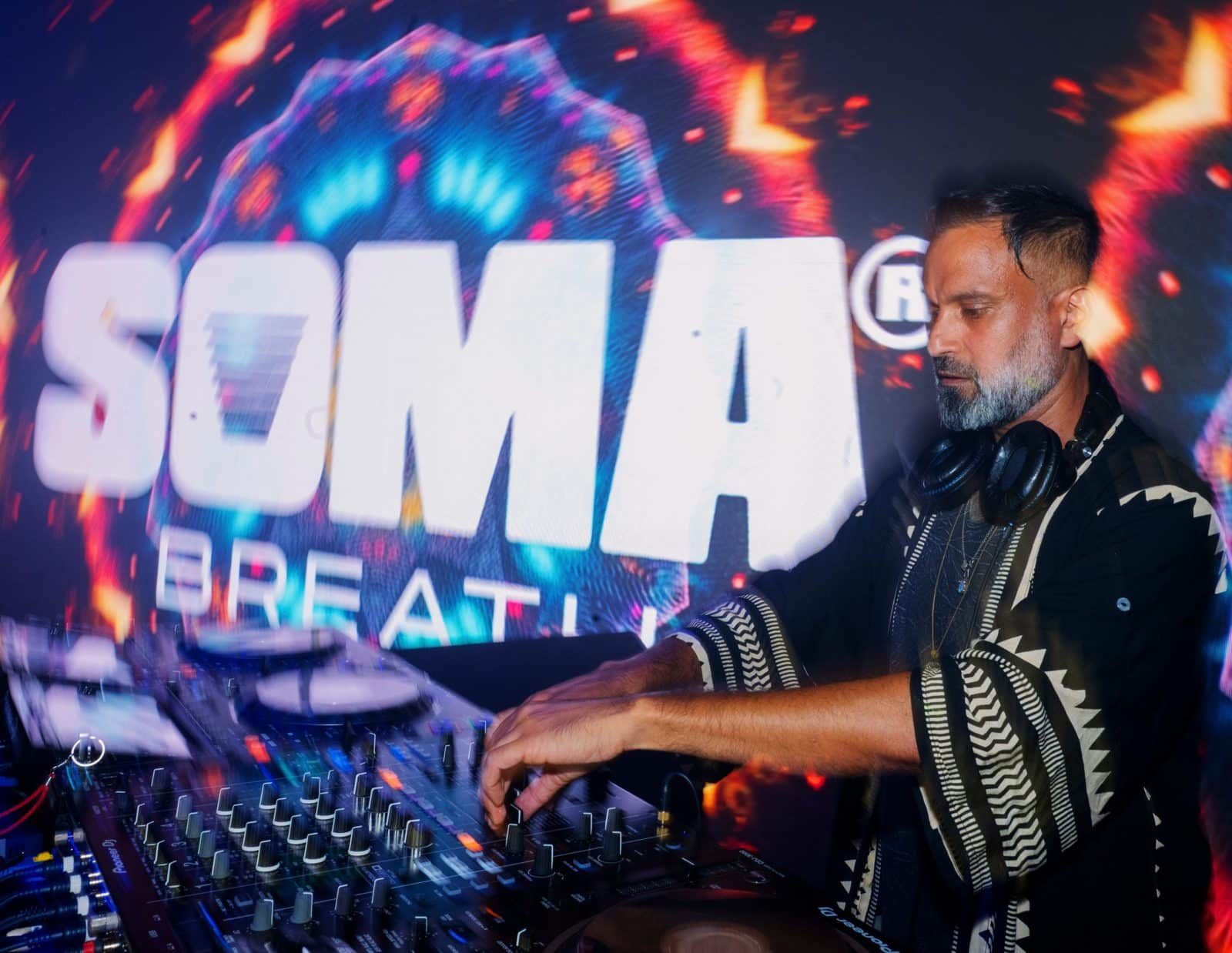
I was a DJ before I was a community pharmacist
People often know me, Niraj Naik, as the pharmacist who founded SOMA Breath. The music came first.
I was DJing from the age of 17. At university, I built a rave business, and for three years I ran events in the UK for around 2,000 people. I loved producing music and playing on stages. Then I lost the business and became a community pharmacist.
I had put away something I loved. In my Mindvalley interview, I talk about how much frustration went with that, and how finding my way back to music became part of the story of SOMA Breath.
As I explored pranayama, I started making music again. I was practising rhythmic breathing with guided affirmations, and I began making tracks around the rhythm of the breath. My experience as a producer finally had somewhere to go alongside what I was learning through practice.
I also went on to produce soundtracks for the Wim Hof Method. Putting music to breathing practices became a thread through my work, rather than leaving music behind to become a breathwork teacher.
The dance floor that brought me back
I still loved dance music, but the lifestyle around the raves I had known was wearing me out. Late nights, drinking and drugs were part of that world. I stopped going to clubs and raves for years.
On Koh Phangan, an island in Thailand, I discovered ecstatic dance. Here was a way to enjoy dancing together without taking substances, with music from different genres and a ceremonial shape to the event.
Shashi Solluna introduced me to it through Kiya, who led the first ecstatic dance journey I experienced. Coming from drum and bass, I was used to an MC rapping and hyping up the crowd. Kiya used the microphone to guide us through different ways of moving and connecting with the music.
That caught my attention. The voice had a different job. It helped people participate in the experience the music was creating.
I also liked hearing different genres together. In my earlier music world, a DJ could get stuck playing one style because that was what their crowd expected. I had become frustrated with that kind of music snobbery. Ecstatic dance gave me room to explore again.
Then I met Tristan Gorski. He heard some of my new productions and encouraged me to play at his regular ecstatic dance parties. He also supported early versions of my SOMA Breath sessions. Some of my first major workshops happened at his events, and that support helped me build confidence in guiding breathwork.
I began working on bringing my breathwork experiences together with ecstatic dance. That grew into breath raves, events combining music and dance with guided breathing. We also ran Ecstatica festivals together on Koh Phangan.
The route from rave promoter to breathwork teacher involved other people opening doors. Kiya showed me another way to guide a room. Tristan gave me somewhere to try it.
Why put music into breathwork?
I wanted people to enjoy doing the practices. I have said this in my teaching: some ancient practices can get boring. Adding music made them more engaging, something people could look forward to.
There is also a practical job for the rhythm. In SOMA Breath, breathing in beats means following a breathing pattern with the music. A track can carry the pace while a voice guides you through the practice. The SOMA Breath music page explains this approach.
The pulse of a piece of music and the pace of your breathing are different things. A beat does not mean you must take a new breath every time you hear it. Follow the breathing guidance for the session rather than trying to match every drum hit.
In my teaching, I describe timing the breath to the beat. The instructions still matter. Music gives those instructions a rhythm you can follow.
From making a track to guiding a session
In the music section of that Mindvalley conversation, I explain how we bring soundtracks together with spoken guidance. Instructors learn to work with the music while guiding the breathing.
My experience with Kiya had shown me what a voice could do inside a musical experience. In my own work, I brought guided language into the breathing practice too. The soundtrack and the words were developed to work together.
For someone choosing a session, that gives you a useful thing to listen for. Can you hear the instructions clearly? Do you know what the next part asks you to do? Is the practice suitable for your experience?
Enjoying the music does not mean you have to follow every breathing instruction beyond your comfort. You can return to your normal breathing or stop. The volume and excitement of an event should never decide how hard you push yourself.
Questions about SOMA Breath music
What is SOMA Breath music?
It is music made for SOMA Breath, the method I founded that combines guided breathing with music and meditation. The tracks support the rhythm of the practice. My background in DJing and production, followed by my experience with ecstatic dance, shaped how I brought these elements together.
Where can I find SOMA Breathwork music?
Start with our music page or the guided practices linked below. Choose a guided session if you want to learn how to breathe with the music. Listening to a track on its own does not tell you which breathing pattern to use or whether an intense practice is suitable for you.
Is there a SOMA Breath music app?
The SOMA Breath app is a route into music-led guided practice. Read the session description and suitability guidance before starting. Choose a beginner practice if you are new, rather than choosing a session because it promises the biggest experience.
Where to go next
- Explore guided breathwork meditations to hear how music and breathing guidance work together.
- Listen to the linked Mindvalley interview for my account of returning to music and bringing it into SOMA Breath.
Important safety and medical information
This article is educational only and is not medical advice. It is not intended to diagnose, treat, cure or prevent disease, and breathwork is not a replacement for medication, therapy or professional care.
Gentle breathing and listening to music are different from intense fast breathing or extended breath retention. Before intense practice, seek advice from a qualified health professional if you are pregnant or have epilepsy or a seizure disorder, cardiovascular disease, uncontrolled blood pressure, an aneurysm, a retinal condition, severe asthma, a psychiatric condition, or a history of panic attacks or dissociation.
Never practise breath holds in or near water, while driving, or standing without support. Practise seated or lying down in a safe place. Stop if you feel dizzy, distressed or uncomfortable, and return to normal breathing. Learn more demanding practices with appropriate guidance and build gradually.