
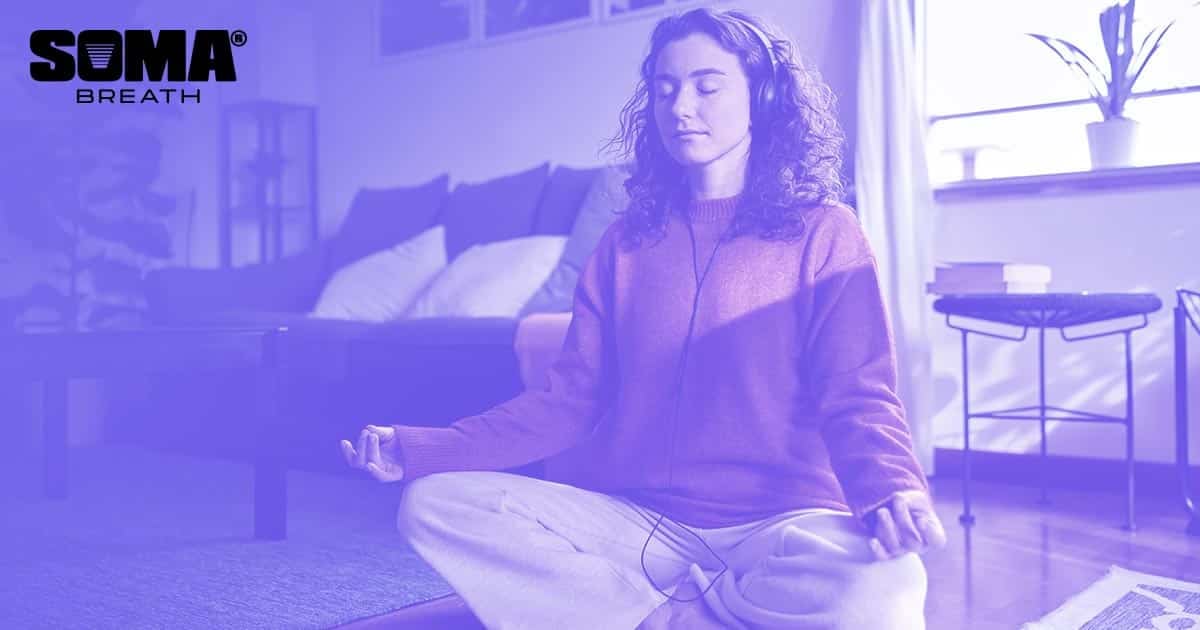
Most people understand that chronic stress is harmful. Fewer recognise that their nervous system has become locked in a near-permanent state of high alert, running on shallow breath and elevated cortisol, quietly degrading sleep, focus, immunity, and emotional resilience.
What science is now confirming is something ancient traditions understood intuitively: rhythm heals. The deliberate pairing of breathwork and music is one of the most accessible, evidence-informed tools available for shifting the nervous system out of survival mode and back into balance.
Why Your Nervous System Is Always Listening
The autonomic nervous system governs everything the body does without conscious instruction: heart rate, digestion, immune response, hormone secretion. It operates through two primary branches. The sympathetic nervous system activates the fight-or-flight response, necessary in genuine emergencies but damaging when chronically engaged. The parasympathetic nervous system governs rest, repair, and recovery, the state in which the body heals and rebuilds.
Modern life has tilted the balance heavily toward sympathetic dominance. Chronic low-grade stress keeps cortisol elevated and breathing shallow, showing up as disrupted sleep, emotional reactivity, reduced immunity, and a persistent inability to switch off fully.
Breathwork for nervous system regulation works because breath is the only autonomic function that is simultaneously involuntary and consciously controllable. Every other function (heart rate, hormone release, digestion) operates beyond direct reach. The breath does not. This makes it a uniquely direct lever for shifting physiological state. Pair it with music, and the effect is substantially amplified.
How Music Influences Brainwaves and Emotional States
The music therapy benefits that practitioners and researchers observe are not confined to mood enhancement. Music engages the brain's emotional processing centers, its executive function regions, and its motor system simultaneously. Rhythm in particular triggers neural entrainment: the brain and body's innate tendency to synchronise their internal rhythms with external ones.
When exposed to a consistent musical tempo, heart rate, breathing frequency, and brainwave patterns begin to naturally align with the beat. In music therapy and breathwork contexts, this entrainment effect is not incidental. It is the mechanism. Different tempos create different physiological states. Music around 60 BPM supports calm, focused awareness. Around 120 BPM, the tempo natural to African drumming traditions and most globally popular music, the body responds with increased energy and rhythmic synchronisation.
SOMA Breath's incredible music secrets lie precisely in this understanding. Founder Niraj Naik, a professional musician and former pharmacist, engineered a proprietary music system calibrated to 60/120 BPM with embedded breath pacers set to specific breathing ratios for different physiological targets. The music does not merely accompany breathwork. It actively directs it.
How Breathwork Regulates the Nervous System
Heart Coherence and the Role of Rhythm
Heart coherence describes a state in which heart rate variability patterns become smooth and ordered rather than erratic. When the heart operates in coherence, the body's other regulatory systems (hormonal, immune, and neurological) tend to follow. Consistent, rhythmic breathing is one of the most reliable ways to achieve this state.
When music provides an external rhythm, it scaffolds the breath, giving the practitioner a reference point to follow rather than a count to maintain mentally. This reduces cognitive load and allows the physiological shift to happen faster, especially for people new to breathwork or those who find silent breath practice difficult to sustain.
The Vagus Nerve and Extended Exhalation
Extended exhalation is one of the most reliable activators of the vagus nerve, the primary pathway of the parasympathetic nervous system. Breathing in ratios where the exhale is longer than the inhale, such as 2:4, 4:6, or 4:8, lowers heart rate, reduces blood pressure, and shifts the body from sympathetic to parasympathetic dominance.
When music sets the pace of breathwork for stress relief, users naturally fall into extended exhale patterns without conscious effort. The musical tempo removes the need to count mentally, freeing attention to rest in the physical experience of the breath and deepening the physiological response.
Benefits of Breathwork With Music: Oxygen, CO2, and Cellular Energy
The benefits of breathwork with music extend to cellular function. The body requires a careful balance of oxygen and carbon dioxide to deliver energy efficiently to its cells. Slow, rhythmic breathing supports this balance, ensuring that oxygen is released from the bloodstream into tissues where it is needed.
Erratic or excessive breathing disrupts this process, reducing cellular energy efficiency and increasing physiological stress. SOMA breathwork music prevents this by pacing the breath at a consistent rhythm, making each session both more effective and gentler on the system than high-intensity cathartic styles of breathwork.
Does Music Really Relieve Stress?
Yes, and the reason goes deeper than distraction or entertainment. Music activates the limbic system, the part of the brain responsible for emotional processing and memory, while simultaneously engaging the body's motor system through rhythm. This dual activation gives music its unique capacity to shift emotional and physiological state quickly and reliably.
The critical variable is how music is used. Passive background listening produces modest effects. Intentional, rhythmically consistent music used as an active guide for breath and attention produces substantially stronger ones. This is the core distinction that separates music therapy and breathwork as a deliberate practice from simply putting on a playlist.
Can Music and Breathwork Reduce Stress? A Practical Starting Point
Both activate the parasympathetic nervous system, lower cortisol, and shift the body's baseline toward recovery rather than reactivity. Used together, they do this more efficiently and consistently than either achieves alone.
Getting started does not require prior experience. A simple five-to-ten-minute practice:
- Choose a track at approximately 60 BPM. Ambient, instrumental, or purpose-built breathwork music works best.
- Sit or lie in a comfortable position with eyes closed.
- Inhale for four counts, exhale for four counts for the first two minutes.
- Extend the exhale to six or eight counts and allow the music to guide the pace rather than counting mentally.
- Close with one to two minutes of natural breathing and notice the shift in your baseline state.
If you want to meditate with music for mental clarity and wellbeing, the combination of structured breathing ratios and intentional musical tempo gives you two evidence-informed tools working in tandem, each amplifying the effect of the other.
The SOMA app provides structured sessions with curated breathwork and music tracks, calibrated breathing ratios, and session types designed for morning energy, daytime focus, or evening wind-down. For those who want to guide others through the practice, breathwork facilitator training through SOMA Breath offers a globally recognised certification grounded in both pranayama tradition and contemporary neuroscience.
When Breath and Rhythm Work Together, the Body Remembers Its Natural State
The human body is rhythmic by design. Heartbeat, breath, sleep cycles, hormonal patterns: all are oscillating systems seeking coherence. Chronic stress disrupts these rhythms. Breathwork for nervous system regulation, practiced alongside intentionally designed music, offers a practical, accessible path to restoring them.
This is not a claim that breathwork replaces medical care. It is a recognition that the nervous system has a built-in capacity to regulate itself, and that rhythm, whether heard through the ears or felt through the lungs, is one of the most reliable ways to support that process. Even five minutes a day, with a consistent breathing ratio and purposefully designed music, creates a meaningful shift over time.
SOMA Breath offers guided sessions where you can experience the full combination of pranayama breathing and proprietary brainwave entrainment music firsthand, with no prior experience required.
Frequently Asked Questions
How does music affect the nervous system?
Music affects the nervous system through neural entrainment: the brain and body's tendency to synchronise their internal rhythms with external ones. Consistent musical tempo can lower heart rate, reduce cortisol, and shift autonomic balance toward parasympathetic activity. Rhythm also engages the brain's emotional and motor systems simultaneously, making it a uniquely powerful stimulus for physiological state change.
How does breathwork regulate the nervous system?
Breathwork regulates the nervous system through voluntary control of the breath's rate and ratio. Slow, extended exhalation activates the vagus nerve and shifts the body from sympathetic to parasympathetic dominance. Rhythmic breathing also promotes heart rate variability coherence, associated with improved emotional regulation, clearer thinking, and lower cortisol levels.
What are the benefits of breathwork with music?
The benefits include faster entry into meditative and coherent states, more consistent extended exhalation patterns, reduced reliance on mental counting, and greater accessibility for beginners. With regular practice, the combination supports reductions in stress and anxiety, improved sleep quality, better emotional regulation, and enhanced mental clarity, though individual responses vary.
Does music really relieve stress?
Yes. Music activates the brain's emotional processing centers and triggers neural entrainment, shifting the body's autonomic state. Intentional use of music within a structured breathwork practice produces substantially stronger stress-relief effects than ambient listening alone.