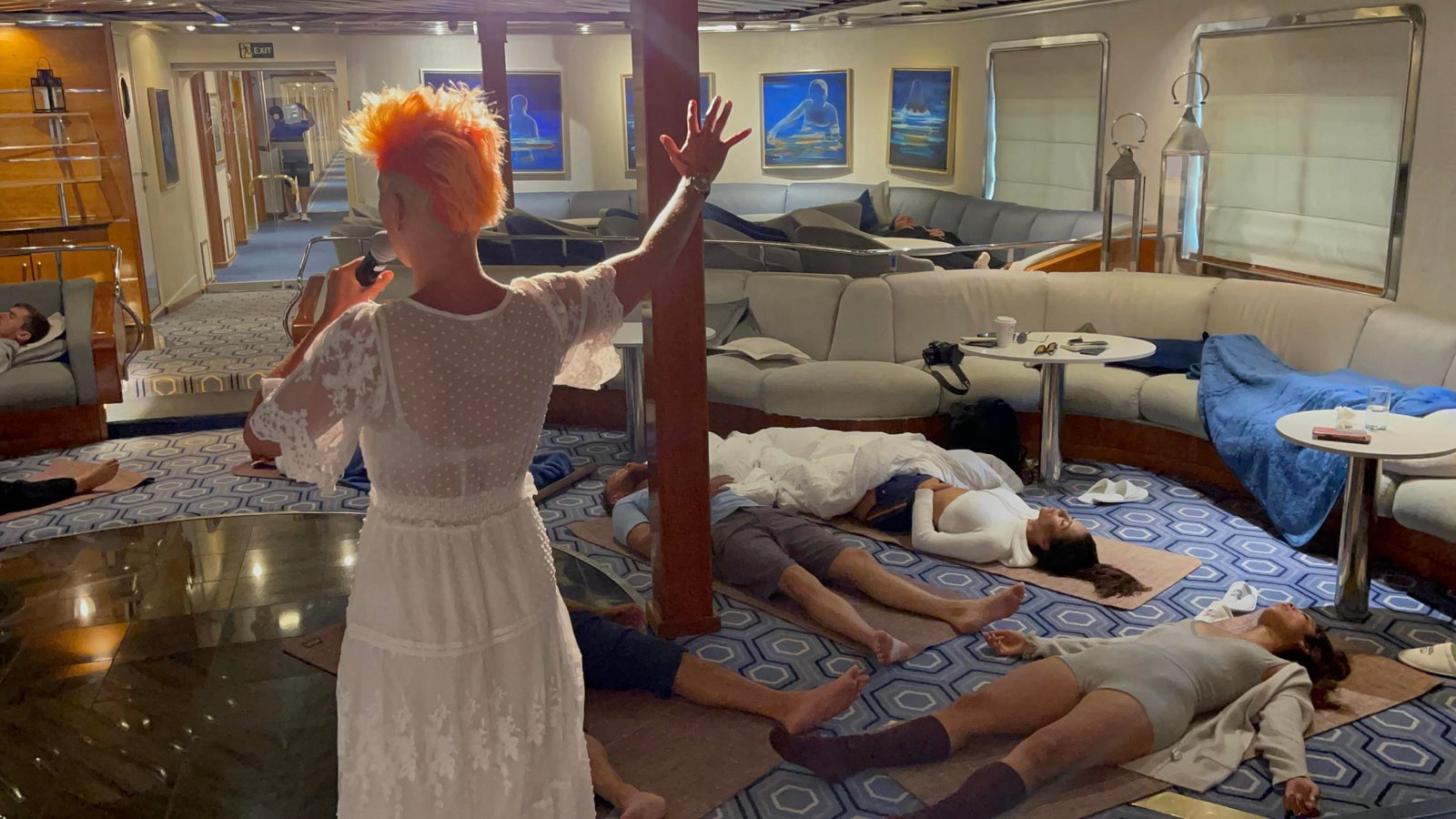
To add breathwork to an existing wellness practice, start with your own practice and pick one clear client moment to improve. Learn a structured method, write down your professional scope, screen participants, and run one gentle pilot with a small suitable group. Collect feedback before you offer longer or more intense sessions. Good training should include supervised facilitation, safety teaching, and help adapting the method to your setting.
You have already built a practice people trust.
Perhaps you work with massage clients who arrive carrying the week in their shoulders. Perhaps your Reiki clients can feel a shift on the table, but need a way to participate rather than receive. Perhaps you coach people who understand their patterns perfectly and still feel stuck in the same state.
Then breathwork catches your attention.
The attraction makes sense. The breath gives a client something immediate to work with. They can feel their rhythm change. Their attention comes back into the body. The room can feel different within minutes.
The awkward question comes next: do you now have to become a completely different kind of practitioner?
No. A sensible integration starts with the work you already do well.
Your existing experience matters. You know how to read a room, hold boundaries, speak to clients, and notice when somebody needs less intensity. Breathwork should add a useful state-change method to that foundation. It should not turn your professional identity into a confused buffet where every technique you have ever learned appears on the menu.
This guide shows how to add breathwork responsibly, test whether clients value it, and decide what level of training you need.
Start with the moment you want to improve
Do not begin by asking, “How can I add breathwork everywhere?”
Pick one moment in your current client journey.
A massage therapist may want a short arrival practice that helps a client settle before bodywork. A Reiki practitioner may want a music-guided practice before the session so the client feels involved in the transition. A coach may want a brief state reset before a difficult conversation. A retreat leader may need an opening experience that helps a group arrive together.
One moment is enough for the first test.
Ask four practical questions:
- What is the client feeling at this point?
- What change would make the rest of the session more useful?
- Which breathing approach fits the person and setting?
- How will I know whether it helped?
This keeps the method tied to a real need. It also stops breathwork becoming an impressive-looking add-on with no clear job. Wellness already has enough decorative garnish.
Experience the method before you teach it
Personal practice comes first.
A practitioner needs to recognise the difference between activation, intensity, release, and integration in their own body. Reading about those states is useful. Feeling them gives the words somewhere to land.
SOMA Breath uses rhythmic breathing, music-driven entrainment, guided meditation, breath retention, vocal toning, and other somatic techniques within a structured session arc. Music is part of the method. The rhythm guides the breath, the breath influences state, and the integration phase helps the experience settle.
That structure matters when you are adapting a session. A lively opening practice has a different purpose from a gentle downshift. A longer immersive journey asks more of the participant than a two-minute arrival exercise.
Before leading clients, practise the relevant format enough to answer simple questions from lived experience:
- What does the opening feel like?
- Where might someone become uncomfortable?
- How is intensity reduced?
- What helps the person settle afterwards?
- How much time does the full arc really take?
A script can help you remember the sequence. It cannot notice a person becoming overwhelmed. That part still requires a human.
Choose a format that fits your existing work
Massage and bodywork
Massage clients often arrive fast. They have driven through traffic, answered messages in reception, and then been asked to relax because a dimmer switch has been lowered. The nervous system is rarely impressed by interior lighting alone.
A short breathing practice can create a cleaner transition into bodywork. The aim is not to force a dramatic experience. It is to help the client notice their breath, feel the support beneath them, and arrive in the room.
A simple integration could look like this:
- Explain the purpose and ask permission.
- Use a brief lower-intensity breathing rhythm.
- Keep the client in a comfortable position.
- Check how they feel before beginning touch.
- End the appointment with a short settling breath if appropriate.
Breathwork can also be offered as a separate session or small-group experience, provided your training, insurance, local rules, and scope support that format.
Keep touch and breathwork boundaries clear. Explain what each part of the session involves. Never assume that consent to massage also means consent to an intense breathing practice.
Reiki and energy work
Reiki practitioners often work with clients who value felt experience and personal meaning. Breathwork can give those clients an active role in the opening or integration of a session.
A music-driven practice may help the person move from mental chatter into body awareness. The session can then continue into Reiki, reflection, or rest.
The cleanest place to begin is with a defined sequence rather than mixing both methods throughout:
- Arrival and consent
- Gentle guided breathing
- A pause to notice the shift
- Reiki session
- Rest and integration
- Brief reflection
This makes it easier to learn what each part contributes. It also helps the client describe what worked.
Avoid framing breathwork as treatment for depression, anxiety disorders, trauma, or other diagnoses. A person may report feeling calmer or more present after a practice. That experience does not turn a wellness session into clinical care.
Coaching and retreats
Coaching can become very verbal. The client understands the story, explains it beautifully, and returns next week with the same nervous system response.
A short breathing practice can help the client notice state before discussing strategy. It may also create a useful pause after a challenging insight.
For a coach, the question is not how intense the practice can become. The question is what supports the coaching objective without taking over the session.
Retreats allow more time, but that does not mean every block needs maximum intensity. A well-designed retreat rhythm includes preparation, clear opt-outs, recovery, and integration. People need time to eat lunch and remember their own name.
For both coaching and retreats:
- State the purpose before starting.
- Make participation optional.
- Explain how to reduce or stop the practice.
- Keep facilitation within your training and professional scope.
- Build in enough time for the person to settle before moving on.
Corporate wellness
Corporate settings need a different level of restraint.
The group may include people with varied health histories, mobility, cultural expectations, and previous experience. Some participants may not want colleagues to see them become emotional. Others may simply be attending because somebody from People Operations put a mysterious “wellbeing experience” in the calendar.
Start with a lower-intensity format. Give clear choices. Avoid presenting breathwork as treatment. Provide a private route for health questions and make opting out socially easy.
A corporate session brief should define:
- The purpose of the session
- The exact breathing method and intensity
- Participant screening or pre-session guidance
- Contraindications and adaptations
- What people can do instead
- How privacy will be protected
- The integration and close
Any public claims about stress, focus, sleep, nervous-system function, or performance should be reviewed and supported. Educational content also needs a clear disclaimer that it is not medical advice or a substitute for professional care.
Why music changes the experience
Many people know regular breathwork or meditation would probably help them. Consistency is the problem. The practice feels like homework, so it joins the admirable collection of routines they plan to restart on Monday.
SOMA Breath uses breathing in beats and music-driven rhythm to make the practice immersive. The participant follows the experience rather than managing a complicated set of instructions in their head.
For practitioners, music can support pacing and session structure. It can help mark activation, peak, integration, and the quieter afterglow that follows. It also gives a group a shared rhythm.
Music does not remove the need for facilitation skill. Volume, track choice, spoken guidance, and session intensity still need judgement. Instructors also need current permission to use music and branded assets in the setting they plan to serve. Usage rights and recurring access terms should be verified before building a paid offer around them.
Define scope before writing the sales page
Breathwork can sit inside wellness, coaching, education, or personal development. It does not grant a practitioner a clinical licence.
Before offering sessions, write down:
- What you are trained to facilitate
- Which clients and settings you serve
- What you do not diagnose or treat
- Which health information needs screening
- When you adapt, stop, or refer
- Which insurance and local requirements apply
- How consent and records are handled
This is not administrative pessimism. Clear scope protects the client and makes the practitioner easier to trust.
Practices involving intense fast breathing require particular care for vulnerable participants. Screening, adaptation, supervision, and relevant contraindications should match the method being used. Long breath holds can be appropriate when the person, setting, and training support them. A blanket fear message is less useful than method-specific guidance.
Test demand before rebuilding your business
You do not need a new logo, six packages, and an alarming number of automated emails before learning whether clients want the service.
Run a small validation process.
Step 1: Speak to existing clients
Ask five to ten suitable clients about the moment you want to improve.
For example:
- “How long does it take you to settle at the start of a massage?”
- “Would a short guided breathing practice before Reiki feel useful?”
- “Do you ever understand a coaching insight but struggle to feel different?”
- “What would make a workplace breathing session feel safe and worthwhile?”
Do not pitch while asking. Listen for the words people use.
Step 2: Design one pilot
Create one clearly bounded experience. Keep the promise modest and specific.
Examples include a gentle pre-massage arrival practice, a Reiki and breath integration session, a small coaching-group reset, or a lower-intensity workplace introduction.
Step 3: Screen and gain consent
Tell participants what will happen. Explain the intensity, alternatives, and stopping options. Collect relevant health information through an approved process.
Step 4: Deliver with support
Your first pilots should sit within your training level. Supervision or mentor feedback is valuable, especially when moving from personal practice to group facilitation.
Step 5: Review what happened
Ask participants:
- What did you notice?
- Which part felt useful?
- Was anything unclear or uncomfortable?
- Would you choose this again?
- How would you describe it to someone else?
Record patterns, not just compliments. One enthusiastic response can feel wonderful. It is still one response.
Step 6: Decide whether to continue
Look at client value, your confidence, the time required, delivery cost, and scope. Then improve the pilot or stop. Both outcomes are useful.
This approach is especially important when money is tight. No training can guarantee income or repayment of the investment. Responsible decisions use realistic demand evidence and conservative financial scenarios.
What good training should help you do
A serious training path should leave you increasingly able to facilitate, adapt, and make sound decisions. Course access alone does not create that confidence.
Look for:
- Personal practice that develops familiarity with the method
- Supervised facilitation and specific feedback
- Assessment tied to real delivery skills
- Clear safety teaching and referral boundaries
- Mentorship when questions appear in practice
- A realistic study rhythm for difficult weeks
- Practical assets for consent, music, session planning, and follow-up
- Ongoing support after the initial training
If you already have years of professional experience, good training should respect it. You are adding another instrument to the band. Nobody needs you to pretend you have never heard music before.
The next sensible move
Choose one client moment. Experience the relevant SOMA Breath practice yourself. Then map the training, scope, and pilot required to serve that moment well.
If the method fits, it can deepen the work people already trust you to do. You keep your professional foundation. You gain another way to help clients shift state through breath, rhythm, music, and structured integration.
Where to start this week
Pick the one client moment you want to improve. Then feel the method yourself before you plan how to teach it.
- Practise with the SOMA Breath app so you know the session arc from the inside.
- Try a free guided SOMA Breath experience if you have not practised the method yet.
- Read the breathwork facilitator and teacher training pathway and ask how it maps onto the practice you already run.
- See what ongoing instructor support looks like through the Global Breath Network.
- Want the mechanism first? Read the scientific explanation of SOMA Breath and how rhythmic breathing affects the nervous system.
Confirm current programme details, music usage rights, support, and scope before you enrol or build a paid offer.
Important safety and medical information
This article is educational only. It is not medical advice. SOMA Breath is not intended to diagnose, treat, cure, or prevent any disease, and it does not replace medication, therapy, or professional medical care. Certification in a breathwork method is not a clinical licence.
Breathing practices that involve intense fast breathing or extended breath retention are not suitable for everyone. Seek guidance from a qualified health professional before practising or facilitating if you or a participant is pregnant, or lives with epilepsy or a seizure disorder, cardiovascular disease, uncontrolled high or low blood pressure, an aneurysm, a retinal condition, severe asthma, a psychiatric condition, or a history of panic attacks or dissociation. Never practise intense breathing in or near water, while driving, or while standing without support.
Screen participants against the exact technique you plan to use, explain how to slow down or stop at any point, make opting out easy, and refer to appropriate professional care when something falls outside your scope.